What materials are used to make wrapped wire? Well, I’m in the wrapped wire business, so I’ve got a pretty good handle on this. Let’s dive right in and take a look at the different materials that go into making these useful products. Wrapped Wire
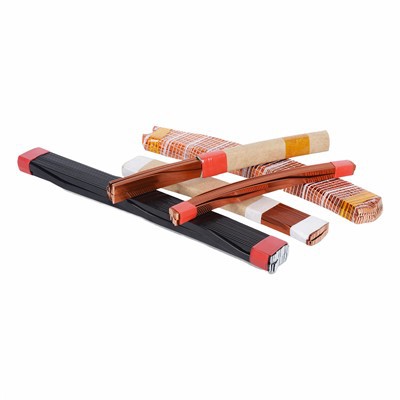
Copper
Copper is one of the most common materials for making wrapped wire, and for good reason. It’s an excellent conductor of electricity, which means it can carry electrical signals with very little resistance. This makes it ideal for use in electrical wiring, electronics, and telecommunications.
I’ve been in the industry long enough to know that copper’s conductivity is a game – changer. Whether it’s for a small electronic device or a large – scale electrical system, copper wrapped wire gets the job done. And it’s not just about conductivity. Copper is also quite ductile, which means it can be easily drawn into thin wires without breaking. This property allows us to produce wrapped wire in a variety of thicknesses to meet different customer needs.
Another advantage of copper is its corrosion resistance. While it may develop a patina over time, this actually protects the underlying metal from further corrosion. That means copper wrapped wire can have a long service life, even in harsh environments.
Aluminum
Aluminum is another popular choice for making wrapped wire. It’s a lightweight metal, which is a huge plus in many applications. For example, in the aerospace industry, every ounce counts. Using aluminum wrapped wire can help reduce the overall weight of an aircraft, which in turn can improve fuel efficiency.
Aluminum is also a good conductor of electricity, although not as good as copper. However, it’s much cheaper than copper. So, if cost is a major factor in a project, aluminum wrapped wire can be a great alternative.
I’ve seen a lot of construction projects where they use aluminum wrapped wire for electrical wiring. It does the job well, and the cost savings can be significant. But it does have its drawbacks. Aluminum is more prone to oxidation than copper, and it can be a bit more difficult to work with in some cases, especially when making connections.
Steel
Steel may not be the first material that comes to mind when you think about wrapped wire, but it has its place. Steel is incredibly strong, which makes it suitable for applications where high tensile strength is required. For example, in the construction of bridges or in the manufacturing of lifting equipment, steel wrapped wire provides the necessary strength and durability.
I remember one customer who was building a large – scale suspension bridge. They needed a wire that could withstand enormous stress. Steel wrapped wire was the perfect solution. It held up under the weight and the constant forces exerted on the bridge.
Steel can also be coated to improve its corrosion resistance. Galvanized steel, which is coated with a layer of zinc, is often used in outdoor applications where rust is a concern. This coating helps protect the steel wire from the elements, extending its lifespan.
Fiber – Optic Materials
In today’s digital age, fiber – optic wrapped wire has become increasingly important. Instead of using metal conductors, fiber – optic wires use thin strands of glass or plastic to transmit data in the form of light signals.
I’ve seen the demand for fiber – optic wrapped wire skyrocket in recent years, especially in the telecommunications industry. It offers extremely high bandwidth, which means it can transmit large amounts of data at very high speeds. This is crucial for things like high – speed internet, cable TV, and long – distance phone calls.
Fiber – optic materials are also immune to electromagnetic interference (EMI), which can be a problem with metal wires. This makes them ideal for use in environments where there is a lot of electrical noise, such as near power lines or in industrial settings.
The glass used in fiber – optic cables is typically made from silica, which is very pure. It has to be because even small impurities can cause signal loss. Plastic can also be used for fiber – optic wires, and it’s often cheaper and more flexible than glass, but it usually has lower performance in terms of data transmission distance and speed.
Nickel and Nickel Alloys
Nickel and its alloys are used in wrapped wire for specific applications. Nickel has good corrosion resistance, and it can withstand high temperatures. This makes it suitable for use in environments where other metals might fail.
For example, in the manufacturing of heating elements, nickel – chrome alloys are commonly used. These alloys can reach high temperatures without melting or corroding, which is essential for efficient heat generation. I’ve supplied nickel – alloy wrapped wire to companies that make industrial furnaces, and they’re always happy with the performance.
Nickel is also a ferromagnetic metal, which means it can be magnetized. This property is useful in applications such as transformers and inductors, where magnetic fields are used to transfer energy. In these cases, the wrapped wire needs to have specific magnetic properties, and nickel alloys can be tailored to meet those requirements.
Insulating Materials
When making wrapped wire, it’s not just about the conductor. The insulating material is also crucial. It prevents the electrical current from leaking out and protects the wire from environmental factors.
One of the most common insulating materials is PVC (polyvinyl chloride). It’s cheap, flexible, and easy to work with. PVC can be extruded around the wire to form a protective coating, and it comes in a variety of colors, which can be useful for color – coding different wires in a system.
If you need an insulating material that can withstand higher temperatures, you might consider Teflon (polytetrafluoroethylene). Teflon has excellent heat resistance and low friction, which makes it suitable for use in high – temperature applications, such as in aerospace and electronics.
Another insulating material is rubber. Rubber has good electrical insulation properties and is also flexible. It’s often used in applications where the wire needs to be bent or flexed repeatedly, such as in electrical cords for appliances.
Well, that’s a pretty comprehensive look at the materials used to make wrapped wire. Depending on your application, you’ll want to choose the right material that meets your requirements in terms of conductivity, strength, cost, and environmental resistance.
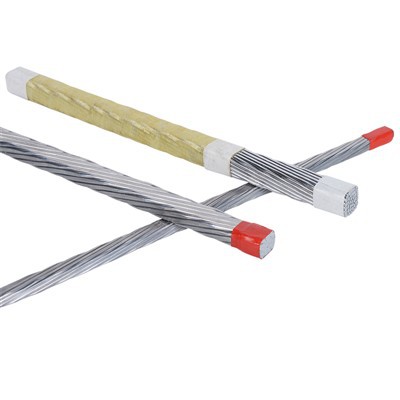
If you’re in the market for wrapped wire, I’d love to have a chat with you. Whether you need copper, aluminum, steel, fiber – optic, or any other type of wrapped wire, I’ve got the expertise and the products to meet your needs. Just reach out, and we can start discussing your project.
Enamel Wire References
- "Materials Science and Engineering: An Introduction" by William D. Callister, Jr. and David G. Rethwisch
- "Electrical Wiring Handbook" by Rexel
Tianjin Jingwei Power Technology Co., Ltd.
As one of the most professional wrapped wire manufacturers and suppliers in China, we’re featured by quality products and good service. Please rest assured to buy durable wrapped wire made in China here from our factory. Contact us for more details.
Address: No.1 Chuangxin Rd. Xiaozhan Industrial Park, Jinnan District, Tianjin, China
E-mail: info@jwdc.cn
WebSite: https://www.jw-dcs.com/
