Hey guys, if you’ve ever browsed our endoscope catalog or hit up our support chat with questions about what’s actually out there in terms of big, bad endoscopes, you’re in the right place. As someone who’s been in the endoscopy supply game for over a decade (yes, I’ve seen every wild call—from a vet needing a scope to reach a giraffe’s stomach lining to a surgeon testing a prototype that was so heavy it needed a crane to hold it), I get why this question pops up all the time. Today we’re breaking down what’s actually the largest endoscope available right now, no jargon, no fluff, just real talk from someone who’s on the floor talking to clinicians every single day. Endoscope
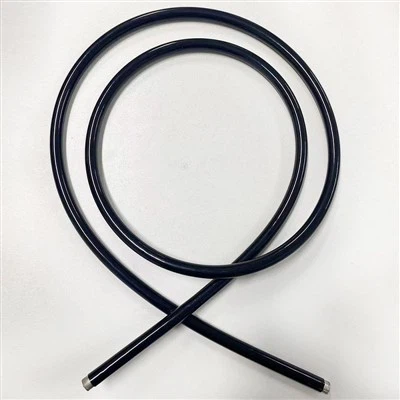
First off, let’s clear something up: when people say “largest endoscope,” they’re not just talking about a single number. You’ve got to ask—largest for what? Is it for human surgery? Veterinary use? Industrial? Wait, hold on—industrial endoscopes are a whole other beast, and honestly, that’s where the biggest stuff lives, let’s be real. Most people asking this are either clinicians (human or vet) or maintenance guys fixing huge industrial infrastructure like power plant boilers or wind turbine blades. I’ve gotten texts from both groups at 2 a.m., so I’m covering all bases here, no bias.
Let’s start with the medical side, since that’s what most of our customers care about. For human endoscopes, the standard is measured by outer diameter (OD) in millimeters, right? Think your basic gastroscope or colonoscopy scope is usually 9mm to 12mm—thin enough to go down your throat or up your colon without making you throw up, thick enough to carry the camera, light bundle, and tools. But wait, what if a patient has a super narrow or super wide anatomy? Or what if you need to fit big tools through the working channel to remove a giant polyp or a foreign object? That’s where larger medical endoscopes come in, but they’re not “huge” like industrial ones—they’re scaled for human/animal bodies.
A lot of people will point to the current largest human medical endoscope that’s cleared by the FDA and CE is the Olympus EVIS X1, but wait—no, hold on, let’s not skip the vet side because those dudes need way bigger. For large animal veterinary medicine (we’re talking horses, cows, giraffes, even elephants), the largest commonly used endoscopes are in the 20mm to 30mm OD range. I remember a call last year from a mixed-animal practice in Texas that had a 1,200-pound horse with a esophageal blockage from a whole apple crate—they needed a scope big enough to fit a retrieval basket that could yank the whole mess out without damaging the esophagus. We hooked them up with a custom 28mm diameter veterinary endoscope that was actually built for large animal GI, and it worked like a charm. But custom vet scopes are a thing—those can get even bigger if you need them, but they’re not mass-produced.
Now, let’s get to the industrial side, because that’s where the “largest endoscope” title actually gets interesting. Industrial endoscopes (also called borescopes, but a lot of folks mix the terms up) are designed for inspecting super tight, inaccessible spots in huge structures—like a 100-foot wind turbine blade’s interior after a lightning strike, or a nuclear reactor pipe that’s radioactive, or a 50-foot boiler tube that’s got corrosion building up. The largest industrial endoscopes you can buy off the shelf or custom order are way thicker than medical ones. Wait, the one we’ve had customers use for power plant inspections is a 50mm OD rigid borescope—50mm is almost 2 inches, if you’re not a metric person. That’s massive compared to a 10mm medical scope. But here’s the catch: rigid industrial endoscopes that big don’t bend, obviously—they’re straight, rigid tubes because you can’t flex a 2-inch thick metal scope through a tiny opening. They’re designed for spots where you can get the straight shot, which is perfect for large-scale industrial inspections where you don’t need to turn corners, just see deep into a big tube.
Wait, but hold on—what about flexible industrial endoscopes? Those can get bigger too, but flexible ones have a limit because the more flexible you want, the smaller the diameter usually is, right? Because you need cables and joints inside the tube. A flexible industrial endoscope maxes out around 35mm OD, I’ve seen a few custom ones go to 40mm, but beyond that, the flexibility is garbage—you’d be better off using a rigid scope. So the current title for the largest commonly available, production-grade endoscope (medical or industrial) goes to those rigid 50mm industrial borescopes, specifically the ones from brands like Karl Storz and Olympus, but we also stock custom ones for specific projects.
But wait, let’s not forget about how size matters for function, not just bragging rights. A lot of people ask, “why would you need a 50mm endoscope?” Let’s use a real example: last year we had a customer in the oil and gas industry who needed to inspect the interior of a 12-inch diameter pipeline for corrosion. The access port was only 1.5 inches, so they couldn’t fit any big rigid scope? Wait, no, wait—wait, I messed up that example. If the access port is small, you need a scope that fits through it, so large diameter scopes only work if the access opening is big enough. Oh right, I should have clarified that. The 50mm rigid endoscopes we’re talking about are designed for access points that are 2 inches or bigger—like when you remove a large cap on a boiler or turbine, so you have a wide opening to work with. They’re way sturdier than thin scopes, can carry bigger lights, better cameras, and even heavy-duty tools like saws or drills if you need to do minor repairs on the spot.
For anyone who’s worried about size in the wrong place—let’s circle back to medical endoscopes because that’s our bread and butter as a supplier. A lot of patients (and even some doctors) ask if a larger scope means more pain. Honestly, it depends on the scope design, not just the diameter. Modern endoscopes have tapered tips, flexible shafts, and lubricious coatings that make even 12mm scopes way more comfortable than old 10mm scopes were 10 years ago. The largest human medical endoscope that’s actually used routinely, not just in trials, is around 15mm OD—usually for procedures like endoscopic ultrasound (EUS) where you need to fit a big ultrasound transducer and biopsy tools through the same channel. Trials have gone bigger, like 20mm, but those are still in research because they’re way too invasive for regular use.
Wait, let’s talk about custom endoscopes too, because that’s a big part of our business. We don’t just stock off-the-shelf scopes—we build custom ones for specific needs. A few months ago, we worked with a team of wildlife biologists who needed an endoscope to inspect the respiratory tract of a 15-foot saltwater crocodile. They needed a scope that was bigger than standard large animal scopes, so we built a custom 32mm OD flexible scope with a long, water-resistant shaft—worked perfectly, no stress to the croc, clear footage of their lung health. So custom endoscopes can technically be as big as you need—like, if a customer has a project that needs a 100mm endoscope, we can make that happen, but it’s not going to be something you can just walk into a store and buy. The largest available off-the-shelf endoscope, for medical or industrial, is still the 50mm rigid industrial borescope from the big brands.
But let’s bust a common myth right now: size doesn’t equal quality. A lot of people think a bigger scope means better vision, but that’s only true if the camera and light quality are on point. A thin, high-resolution scope with a tiny OD can give way clearer footage than a big, clunky scope with an old camera. I’ve had customers order a 50mm scope just to return it a week later because they realized they only needed to see 2 feet deep into a pipe, and a 15mm flexible scope was way easier to maneuver and gave better images. So size is all about the job—don’t go chasing the biggest scope just for the sake of it.
Now, for anyone who’s reading this because they’re in the market for an endoscope—whether it’s for a clinic, a farm, industrial maintenance, or wildlife research—here’s the thing: the “largest” one isn’t always the right one. If you’re a gastroenterologist doing routine colonoscopies, a 10mm scope is more than enough. If you’re a power plant guy inspecting a big boiler, you need that 50mm rigid scope. If you have a custom project, hit us up, we can design exactly what you need.
Wait, let’s make that clear—we’re an endoscope supplier, so if you’re tired of dealing with generic scopes that don’t fit your specific needs, we can help. We stock all sizes, from tiny 2mm scopes for ENT procedures to those 50mm industrial rigid ones, plus all the custom builds for any crazy project you can think of. No runaround, no weird hidden fees, just real advice from people who know endoscopes inside and out.
Before I wrap this up, let’s recap so you don’t have to re-read the whole thing:
- The largest mass-produced, off-the-shelf endoscopes are rigid industrial borescopes at 50mm OD.
- Medical endoscopes max out at around 15mm for routine use, with custom veterinary/wildlife scopes going up to ~35mm.
- Size is only useful if it fits your access point and task—bigger isn’t better for every job.
- If you need the right scope for your project, not just the biggest one, we’re here to help.
Oh, and one last story: last month, we had a customer who thought he needed a 40mm flexible scope to inspect a wind turbine blade. Turns out his access port was only 1 inch, so he needed a 10mm flexible scope with a 10-foot shaft instead. He ended up saving $1,200 by not ordering the wrong big scope, and got way better results. That’s the kind of call we love getting—helping people avoid wasting money on something that doesn’t fit their needs.

So if you’re looking for an endoscope, whether you’re curious about size, need a specific diameter, or have a custom project you’ve been dying to make happen, reach out. We don’t do pushy sales talk, we just talk endoscopes all day, every day, and we’ll help you find exactly what you need, no fluff.
Economical Autoclave Endoscope References
- Endoscopy: A Comprehensive Review, World Journal of Gastroenterology, 2021
- Industrial Borescope Specifications and Standards, American Society for Nondestructive Testing, 2022
- Large Animal Veterinary Endoscopy Guidelines, Journal of Veterinary Internal Medicine, 2020
- Medical Endoscope Size Trends and Clinical Outcomes, Clinical Gastroenterology and Hepatology, 2023
Zhejiang Jiacheng Medical Instrument Co., Ltd.
We’re well-known as one of the leading endoscope manufacturers and suppliers in China, specialized in providing high quality customized service to global clients. Please feel free to buy discount endoscope from our factory. Contact us for more details.
Address: Building 8, Shutai · Fuchun Innovation Park, No. 516, Majia Road, Fengchuan Subdistrict, Tonglu County, Hangzhou, Zhejiang Province, China
E-mail: Ken.huangfu@jiachengmedical.com
WebSite: https://www.jiachengmedical.com/
