Hey there, if you’re in industrial settings where flammable gases, dust, or fumes are just a constant (and risky) part of the job, you already know explosion-proof gear motors aren’t just a “nice-to-have” — they’re non-negotiable. As someone who’s been supplying these bad boys for over a decade now, I’ve fielded way too many questions from plant managers, maintenance leads, and even new engineers who skip over a tiny but critical spec: starting torque. Most folks fixate on the voltage, frame size, or IP rating, but sleep on starting torque — and that’s where the wheels (literally) fall apart, or even worse, where safety becomes a problem. Explosion-proof Gear Motor

Let’s break this down like we’re geeking out over a motor, not a dusty technical manual, but keep it real. First, what’s starting torque, anyway? For anyone not knee-deep in motor specs: that’s the twist the motor generates the second it kicks on, before it even gets up to full speed. With a regular motor, sure, that matters for heavy loads, but with an explosion-proof (EXP) gear motor? It’s a whole different ballgame — because these motors are built to be sealed tight to prevent sparks from escaping into hazardous areas, and that built-in protection adds some bulk and friction regular motors don’t have. That extra friction, plus whatever load you’re pushing (think conveyor belts in grain silos, mixers with caked-on materials, or fans handling volatile fumes), means you can’t just slap any old torque number on there.
Here’s the first big performance hit if you get starting torque wrong: stuck motors. I’ve had a client a few years back in a grain processing plant who ordered an EXP gear motor with way too low starting torque for their inclined conveyor. First run, the motor hummed like a dying bee, couldn’t budge the belt holding 2,000 lbs of grain, and — worst part — got so hot from stalling that the sealed casing started to build up internal pressure. Stalling an EXP motor is not just inconvenient; it’s a safety hazard because that overheated casing can ignite any flammable dust that seeps in through even the tiniest seal gap, or worse, the motor’s internal windings could arc (something the EXP casing is supposed to contain, but stalling for too long? That’s a risk no one wants to test). We ended up swapping in a motor with 3x the starting torque their initial order had, and that conveyor’s run time has been smooth ever since — no stalls, no safety scares.
Then there’s gear wear. Gear motors are just motors paired with gear reducers to crank up torque, right? If your starting torque is too low, the gears have to fight to get the load moving. That constant grinding, the slamming into full torque as the motor finally kicks in? It’s like slamming a car into third gear from a standstill — over time, those gear teeth chip, the bearings wear out way faster, and you’re looking at unplanned downtime that costs way more than paying a little extra for the right starting torque. I had a chemical plant client who was running 12-hour shifts, 6 days a week, with under-torqued gear motors on their agitators. In 18 months, they’d gone through 4 sets of gears. After we upped the starting torque, those same motors are still going strong 5 years later. The big takeaway here: starting torque isn’t just about getting the load moving — it’s about extending the lifespan of the gearbox, which is the most expensive part of the gear motor.
Wait, but don’t get it twisted — too much starting torque is also a problem. I’ve seen clients order a motor with way higher starting torque than they need, and that causes a whole set of issues. Like, sudden jolts. If you’ve got a conveyor handling delicate parts (think: pharmaceutical vials that can crack, or printed circuit boards that can bend), a motor with excessive starting torque will yank the belt so hard it sends those parts flying. Or, in some cases, it can snap the shaft entirely. Last year, a small parts manufacturer hit me up because their high-torque EXP gear motor had snapped the output shaft on their packaging line mid-run. They’d opted for a motor with extra torque “just to be safe,” not realizing the sudden, massive twist was way more than the shaft could handle. It’s a balance, not a “bigger is better” situation.
Now, let’s tie this back to explosion-proof specifics — this is where this topic is unique to our products, not just any motor. EXP gear motors have that tight, flameproof casing, right? The internal parts (windings, contacts) are sealed so if there’s a spark, it can’t escape to the hazardous area. But that seal adds friction — the shafts go through gaskets, the casing itself is thicker, so the motor has to work harder to spin up. If your starting torque is too low, you’re not just stuck with a useless motor — you’re looking at the motor not meeting its full-speed torque either, which means your process runs slower, productivity drops, and maybe even your plant isn’t meeting regulatory standards (OSHA, ATEX, NEC — I’ve seen plants get fined big time for using motors that don’t meet hazmat specs, and a big part of that is not matching torque to the environment).
Another thing I see folks miss: ambient conditions. If you’re working in cold environments (like freezers for food processing, or outdoor chemical plants in winter), lubricants in the gearbox get thicker. That adds even more friction, so your required starting torque goes up. I had a client in northern Canada who was using EXP gear motors for their bulk material handling in a -20°F warehouse. When they first installed standard torque motors, they couldn’t get them to start at all once the lubricant thickened. We swapped them for motors with 15% higher cold-temperature starting torque, and that fixed the issue overnight. If you ignore ambient temps when picking starting torque, you’re setting yourself up for failure, no matter how good the rest of the motor is.
Let’s talk numbers for a sec, but keep it real. Most EXP gear motors have a starting torque spec (usually called “locked rotor torque” or LRT, that’s the industry term, but I’ll use starting torque here) rated as a percentage of full-load torque. For light loads, you want LRT around 120-150% of full-load torque. For medium loads (conveyors, mixers with light caking), that jumps to 180-220%. For heavy loads (incline conveyors, agitators with thick slurry), you’re looking at 250% or more. I always tell clients: don’t just go by the load on paper — add 20-30% extra for that gearbox friction, ambient conditions, and any unexpected caking or buildup. Because “expected” load never lines up perfectly with what actually happens on the plant floor.
Here’s a quick common mistake I see new plant managers make: looking at the motor’s horsepower instead of starting torque. Horsepower is about speed, right? Torque is about twist. A motor with the same horsepower can have wildly different starting torques, depending on its design. For example, a single-phase EXP gear motor for a small conveyor will have lower starting torque than a three-phase motor of the same horsepower, because three-phase motors produce a smoother, stronger twist right off the bat. If you mix those up, you’re in for a world of hurt.
Now, let’s get to the part that matters for you, the person reading this — what does this mean for your operation? If you’re troubleshooting a stalled gear motor, check the starting torque first. If you’re spec’ing a new one, don’t just grab whatever’s cheapest. Ask your supplier (that’s me, fyi) for a torque calculation that accounts for your load, gearbox friction, ambient temps, and the specific hazardous area you’re working in — like if you’re dealing with Class I, Division 1 gases, or Class II, Group E dust, that changes the seal and friction requirements, so starting torque needs to adjust too.
I can’t stress enough how many avoidable issues start with ignoring starting torque. Unplanned downtime, gear replacements, safety hazards, regulatory fines — all of that adds up to way more cost than getting the right motor from the start. I’ve been supplying explosion-proof gear motors for long enough to know that a little extra time spent getting the specs right (especially that starting torque) saves everyone a ton of headaches later.
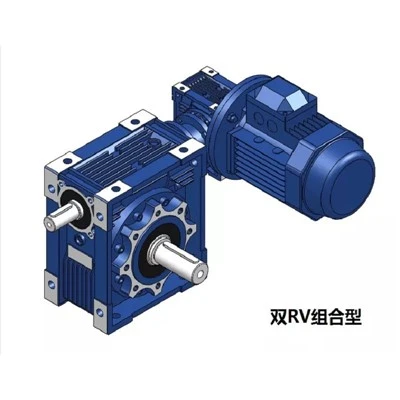
If you’re currently dealing with a motor that’s struggling to start, or you’re planning a new installation and want to make sure you’re not missing a critical spec, I’m here to help. No confusing jargon, no hard sell — just straight talk about what works for your specific hazardous environment. Reach out to chat through your exact needs, whether that’s sizing up a replacement or getting a custom spec for a new setup. Let’s make sure your motors run smooth, safe, and long — no stalls, no surprises, no unnecessary costs.
RF Hypoid Gear Motor References
- IEEE Standard for Explosion-Proof and Flame-Protected Rotating Electrical Machinery, IEEE Std 841-2014
- National Electrical Code (NEC) Article 500: Hazardous (Classified) Locations
- ATEX Directive 2014/34/EU: Equipment for Potentially Explosive Atmospheres
- Gear Motor Design and Application Guide, Motion Control Association, 2022
- Industrial Motor Starting Performance, Department of Energy Industrial Technologies Program, 2019
GuangDong Ruisico Transmission Technology Co., Ltd.
Guangdong Ruisico Transmission Technology Co., Ltd. is one of the most reliable explosion-proof gear motor manufacturers and suppliers in China, also supports customized service. Welcome to buy durable explosion-proof gear motor made in China here and get quotation from our factory. For price consultation, contact us.
Address: No. 70, Anjing Road, Shengfeng Community, Xiaolan Town, Zhongshan City
E-mail: info@risc-drive.com
WebSite: https://www.risc-motor.com/
