Can silos be used for storing salt? As a silo supplier who’s spent the last 12 years designing and building storage solutions for bulk materials, this question comes up at least once a week—most often from salt producers, food processing plants, and even road maintenance crews looking to improve their salt handling. The short answer is yes, but the long answer is where the real value lies. Silos aren’t just for grains or cement; when engineered correctly, they solve some of the biggest headaches salt handlers face, from clumping to contamination to inconsistent inventory. Let’s break this down, based on what we’ve learned working with over 70 salt operations across North America. Silo
First, let’s talk about what makes salt tricky to store. Salt (sodium chloride) is a hygroscopic material, meaning it absorbs moisture from the air. Even in relatively dry climates, ambient humidity can drive up salt’s moisture content to 3% or more, turning fine, free-flowing granules into hard, cement-like clumps that won’t move through traditional hoppers or conveyor belts. For industrial salt used in de-icing, that’s a disaster: clumps can clog spreaders on trucks, leaving roads with bare, icy spots. For food-grade salt, clumps often mean lost product, since processors can’t use lumpy salt in table salt, cheese brines, or canned goods. That’s where silos come in—specifically, silos designed to control moisture, manage flow, and protect salt from external contaminants.
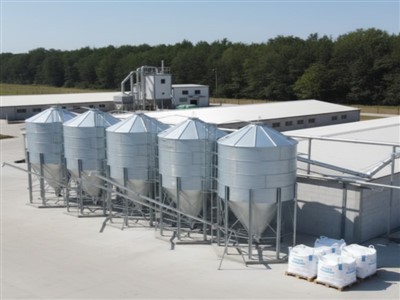
Wait, not all silos work for salt. A mistake we see many salt producers make is trying to use standard grain silos, which aren’t built with salt’s needs in mind. Standard grain silos usually have smooth steel walls and a conical hopper with a 60-degree slope. But salt’s density is higher than grain (about 80 pounds per cubic foot, compared to 48-55 for wheat) and its abrasive nature can wear down thin steel liners. More importantly, smooth walls can cause salt to “rat-hole”—a problem where material flows only from the center of the hopper, leaving a ring of salt stuck to the walls that hardens over time. To fix that, our salt silos use two key design tweaks: textured steel walls and modified hopper slopes. We line the interior with 12-gauge steel (thicker than the 14-gauge common in grain silos) and apply a fine, gritty texture to the walls. That texture creates enough friction to prevent rat-holing, while still letting salt flow consistently. For the hopper, we use a 45-degree slope instead of 60—salt’s weight and granular shape mean a shallower slope is enough to encourage flow, and it reduces the height of the silo, cutting down on material handling costs.
Next, moisture control is non-negotiable for salt storage. If salt absorbs too much moisture, not only does it clump, but it can also react with steel walls over time, leading to corrosion. That’s why our salt storage silos come with two moisture management systems: a sealed top hatch and a climate control ventilation system. The top hatch isn’t just a standard access point—it’s a gasketed, airtight seal that prevents humid outdoor air from seeping in when you load or unload the silo. For facilities in humid regions, we add a network of perforated ducts along the base of the silo that pull in dry, dehumidified air from outside. The air circulates through the salt pile, drawing out excess moisture, and then is filtered before being vented back out. We’ve tested this system in Florida, where summer humidity hovers around 80%, and it keeps salt’s moisture content below 1% even after 6 months in storage—something that standard, unventilated storage can’t come close to. We also offer a heated hopper option for facilities in cold climates, where frozen salt can be a problem in winter. A series of heating coils wrapped around the hopper walls keeps the salt above freezing, so it flows smoothly even when temperatures drop below 20°F.
Another big advantage of using silos for salt over other storage options, like piles or bags, is inventory management. Salt is often a seasonal product: de-icing demand peaks in winter, while food-grade salt production is steady year-round. When you store salt in piles, it’s almost impossible to track inventory accurately—you can’t tell how much salt is left without digging into the pile, and the top layer absorbs moisture from rain, turning into unusable mud. Bags take up tons of space, require manual labor to load and unload, and are prone to tearing, leading to lost product. Silos, on the other hand, have volume sensors that let you track inventory in real time. We install non-contact radar sensors at the top of the silo that measure the distance to the salt surface, so you can see exactly how much salt is left from your office. Some of our clients, a midwestern road maintenance department, use these sensors to schedule deliveries automatically—when inventory drops below 1,000 tons, our system sends a alert to their supplier, so they never run out of salt during a snowstorm. For food-grade salt producers, silos also prevent cross-contamination. If you store food-grade salt next to industrial salt in bags, dust from the industrial salt can drift onto the food-grade product, making it unfit for human consumption. Silos are fully sealed, so you can store different grades of salt in separate silos, eliminating that risk entirely.
We’ve seen firsthand how this works for our clients. Last year, we installed four 5,000-ton salt silos at a major food processing plant in Iowa. Before that, they stored food-grade salt in 50-pound bags in a warehouse, and they were losing an average of 12% of their product each year to clumping, tearing, and cross-contamination. After switching to our silos, that loss dropped to 2%. They also cut their labor costs by 15 hours a week, since they no longer needed to manually load and unload bags. Another client, a road salt producer in Minnesota, switched from open piles to our salt silos in 2021. They used to have 15-20% of their salt turn into unusable, muddy piles every spring from rain and snow melt. Now, they store all their salt in 10,000-ton silos, and that waste has gone down to less than 1%. They even told us their spreaders on trucks are running 25% more efficiently, since the salt flows smoothly without clogging.
Of course, there are caveats. Silos aren’t the right fit for every salt operation. If you’re a small-scale producer with less than 500 tons of annual storage needs, a silo might not be cost-effective—you’d be better off with smaller, portable bins. Also, if you’re storing very coarse salt (like rock salt used for road de-icing) vs. fine evaporated salt, you might need minor adjustments to the hopper design: rock salt is larger and more angular, so we use slightly steeper hoppers (50 degrees) to prevent bridging, where salt forms a solid arch in the hopper that stops flow. But for most operations that store 1,000 tons or more of salt, silos are worth the investment.
The bottom line: Silos aren’t just for grain and cement. When designed specifically for salt’s unique properties—hygroscopicity, abrasiveness, and flow needs—they solve some of the most persistent problems salt handlers face. They reduce product loss, cut labor costs, improve inventory accuracy, and protect against contamination. As a silo supplier who’s specialized in bulk material storage for two decades, I can say without hesitation that salt is one of the most common, and most rewarding, applications for our custom-engineered silos.

If you’re currently dealing with clumping salt, inconsistent inventory, or high product loss, we’d love to walk through how our salt storage silos can work for your operation. Every client’s needs are different—we design silos for small food producers and large road maintenance departments, with options for climate control, heating, and inventory tracking. Reach out to our team to discuss your storage challenges and get a customized quote for your facility.
Silo References
- Bulk Solids Handling: Storage and Flow of Hygroscopic Materials, 2022, Elsevier
- Salt Storage Best Practices for Industrial and Food-Grade Applications, National Association of Chemical Distributors, 2021
- Silo Design for Abrasive Granular Materials, Journal of Construction Equipment Research, 2020
- Hygroscopicity and Moisture Control in Salt Storage, United States Department of Agriculture, Agricultural Marketing Service, 2019
Henan Oumu Intelligent Storage Equipment Co., Ltd.
As one of the most professional silo manufacturers and suppliers in China, we’re featured by quality products and good service. Please rest assured to buy customized silo made in China here from our factory. For quotation, contact us now.
Address: No. 681, Xinzhong Avenue, Hongqi District, Xinxiang City, Henan Province
E-mail: luna@oumu-silo.com
WebSite: https://www.oumu-silo.com/
