Hey there, it’s Mia from the battery team here – I get at least a dozen DMs and emails a week asking this exact question: “Can I use a battery that has a different shape than the original one in my device?” Most of the time, this comes from a small business owner whose custom gadget design got delayed because the off-the-shelf battery they need is either backordered or doesn’t fit the weird, compact space their team engineered. Sometimes it’s a maker who’s prototyping a new portable air conditioner for camping, or a medical device engineer tweaking a insulin pump to be slimmer than the current model. Today, I’m pulling back the curtain on what we actually see as a battery supplier when these questions land in our inbox, because it’s never a yes or no answer – it’s a conversation, and there’s a lot more to it than just grabbing a battery that looks a little different. Battery
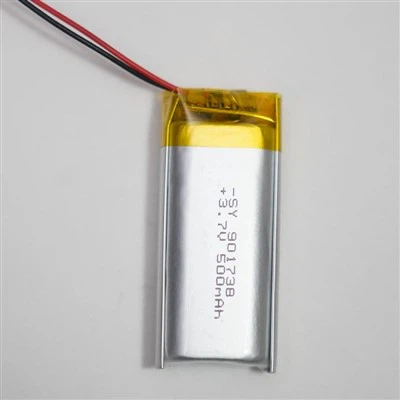
First, let’s bust the most common myth: you can’t use a different-shaped battery if it just looks off. That’s not true, but it’s also not as simple as “I need a rectangle instead of a circle” or “a slightly shorter cylinder”. Let’s start with the core basics that any battery needs to work safely, regardless of shape: form factor isn’t just about aesthetics, it’s about fit into the device’s enclosure, but also about two non-negotiables: electrical compatibility and mechanical safety. When a device’s original battery was designed, the manufacturer picked a specific cell shape – usually a 18650 cylinder, a prismatic pouch, or a coin cell – because that shape delivers the right energy density for the space, fits the device’s internal wiring layout, and can be secured without putting pressure on the cell. Take for example, a portable speaker that originally uses a pair of 18650 lithium-ion cylindrical cells. Those cells have a built-in metal casing that acts as a safety barrier for the internal chemistry, so they can withstand minor impacts without leaking. If someone tried to swap those for a similarly sized pouch cell that’s got a soft plastic casing, even if it’s the same capacity and voltage, there’s a risk the speaker’s tight enclosure could pinch the pouch, causing a leak or a short circuit. That’s the kind of detail we have to flag immediately, not because we’re being picky, but because we’ve seen devices return with corroded wiring from a mismatched battery shape that wasn’t tested.
That said, we’ve also helped clients modify battery shapes for projects that were previously thought impossible. A few months back, a team building a wearable ECG monitor hit a wall: their original 20mm coin cell battery was too thick to fit the new slimline wristband they’d redesigned. They needed a battery that was only 15mm thick, but still had the same 3.7V voltage and 200mAh capacity as the original. Most suppliers would’ve told them it wasn’t possible, but we worked with our R&D team to take a thin prismatic pouch cell, slightly reshape the edges to curve around the ECG sensor’s mounting point, and add a custom adhesive backing that secured it to the wristband without needing extra space. The key here was that we didn’t just change the shape for the sake of it – we matched the critical specs first, then adjusted the shape to fit the device’s needs. That’s the first rule we lay out for every client asking about a different-shaped battery: prioritize the electrical requirements before you touch the shape.
Let’s break down those critical specs because they’re non-negotiable, no matter how much you want a custom shape. First is voltage. A lot of people think voltage is just a number, but mismatched voltage is dangerous. If your original battery is 3.7V lithium-ion, you can’t swap it for a 3.2V lithium-iron phosphate (LFP) battery, even if the shape is the same. The lower voltage won’t power your device properly, and using a shape that’s a little off could lead to a bad connection, making the device turn on and off unexpectedly. Next is capacity, measured in milliamp-hours (mAh) or amp-hours (Ah). If you switch to a battery with a different shape, its capacity will almost always change – either higher or lower – and that means runtime will change too. A client building a solar-powered garden light came to us last year; they had a round 18650 cell that gave them 5000mAh and 10 hours of light. They wanted a flat, rectangular shape to fit under the light’s solar panel, but the closest rectangular cell we had only offered 4000mAh, which cut their runtime to 8 hours. We were able to adjust the cell’s internal chemistry slightly to get 5000mAh into the smaller rectangular shape, but that took a custom order and some testing to make sure the energy density didn’t cause overheating. That’s another point: custom shapes often require adjustments to the cell’s internal components, so you can’t just take a standard cell and cut it to fit – that would tear the separator layers inside the cell, leading to immediate failure.
Mechanical and thermal constraints are the next big thing, and this is where a lot of DIY makers go wrong when they swap shapes without checking. Every battery generates heat when it’s charging or discharging, especially during fast charges or high-draw use. The original battery shape was designed to fit the device’s heat sinks or ventilation slots, so if you put a differently shaped battery in, that heat can’t escape properly. For example, a power tool that uses a pack of rectangular prismatic cells has built-in channels between each cell for airflow. If you swap that for a mix of small cylindrical cells packed tightly together to fit the same space, there’s no airflow, and the cells can overheat during a 10-minute drill session, leading to thermal runaway. We had a client make this mistake with their new handheld vacuum prototype a couple years ago: they swapped the original rectangular battery pack for a batch of random cylindrical cells that fit the empty space in the enclosure, and when they tested it for 5 minutes, the vacuum got so hot the plastic casing started to warp. We had to rework the shape, adding small notches to the sides of the custom cells to let air flow through, and adjust the battery management system (BMS) to limit the discharge rate. That fix kept them on track for their launch, but it was a close call.
Another mechanical point is battery connections. The original battery’s terminals are designed to connect to your device’s circuit board, and they’re placed at specific points to balance weight and power delivery. If you change the shape of the battery, you have to adjust the terminals too – or your device won’t recognize the battery, or it won’t charge properly. We once worked with a medical device client that needed a curved battery to fit the inner edge of a prosthetic arm. They initially tried to use a standard prismatic cell and bend it (which most suppliers will tell you not to do, by the way – bending lithium cells damages the internal separator), so we created a custom curved pouch cell with tabs that were aligned to match the prosthetic’s circuit board. We also added a small plastic guard around the terminals to make sure they didn’t short against the metal arm of the prosthetic. That’s a perfect example of how changing the shape isn’t just about fitting – it’s about integrating every part of the battery to work with the device.
Now, let’s talk about when it’s actually a bad idea to switch to a different-shaped battery. First, if your device is already certified for safety – like a medical device that’s FDA-approved, or a consumer electronic that’s UL-listed – changing the battery shape could void that certification. Regulators test devices with their original battery, because they test for safety risks like leakage, fire, and electrical failure. If you swap to a different shape, you’d have to re-do that entire certification process, which is time-consuming and expensive. That’s why we always advise clients with certified devices to first check with their certifying body before making any changes. Second, if the shape change would require modifying the device’s enclosure. A lot of makers think they can just stuff a differently shaped battery into their existing device, but that’s a recipe for issues with fit, connection, or safety. Modifying the enclosure to fit a custom battery shape is often easier and safer than forcing a battery into a space it doesn’t belong, and we’ve had clients design enclosures specifically around our custom battery shapes, which works way better than the other way around.
Wait, let’s circle back to what I said at the start – this is where being a battery supplier is different from just selling parts. We don’t just ship a battery that looks the part; we work with clients through the entire process, from prototyping to mass production. For example, when a client reaches out asking for a different-shaped battery, here’s the conversation we have: first, ask them to share the original battery’s specs (voltage, capacity, chemistry, dimensions, and any safety features). Then, we ask for details about the device: how it’s powered, what kind of space is available, how the battery is secured, and whether there are any regulatory requirements. Then, our R&D team puts together a few options: sometimes a modified standard cell that’s already in our inventory, sometimes a small custom shape, and sometimes even a pack of small cells arranged to fit the exact space. We also do testing for every custom shape – we run charge/discharge cycles, thermal testing, drop tests, and leak tests – to make sure the new shape is just as safe and reliable as the original.
I think the most memorable example I can share is from a startup that was making a portable oxygen concentrator for home use. Their original battery was a bulky rectangular pack that added 2 pounds to the device, making it hard for elderly patients to carry. They wanted a curved battery that fit along the back of the concentrator, so it balanced the weight and cut 0.5 pounds. No standard battery had that shape, so we worked with them to design a custom LFP pouch cell shaped to match the contour of the concentrator’s back, with a BMS that was built into the curve. We tested it for 500 charge cycles, and it still retained 80% of its capacity – the standard threshold for battery lifespan. They launched the device last year, and we’ve since gotten feedback that patients love how light and balanced it is. That’s the kind of solution that makes this job worth it – not just checking a box and shipping a part, but solving a problem with a battery that fits, works, and is safe.
So, to wrap this up: yes, you can use a battery with a different shape than the original – but only if you prioritize electrical compatibility, test for safety, and work with a supplier that understands the difference between a custom shape that’s designed to work with your device and a random shape that might cut corners. It’s not a one-size-fits-all answer, and it’s not something you want to wing by grabbing a battery off a third-party seller that looks close enough.
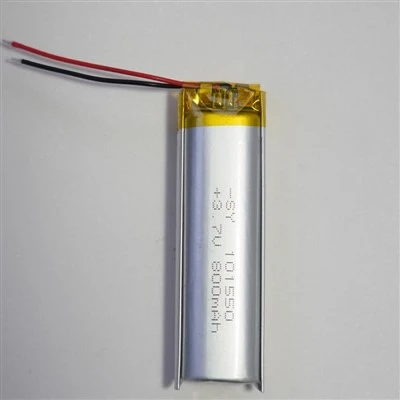
If you’re a maker, engineer, or business owner with a project that’s stuck because your original battery shape isn’t working, we’d love to walk through your options. We don’t just sell batteries – we partner with our clients to design solutions that fit their exact needs, no matter how unique the shape or specs are. Whether you need a small custom cell for a wearable, a shaped pack for a power tool, or anything in between, we can help you navigate the requirements, test the design, and get you a battery that works as well as the original – even if it looks a little different.
70 Series Battery References
- Lithium-Ion Battery Safety: Understanding Cell Design and Failure Modes. National Fire Protection Association.
- Custom Battery Form Factors: Balancing Energy Density and Device Integration. Battery University.
- Regulatory Requirements for Custom Battery Packs in Consumer and Medical Devices. UL Solutions.
- Mechanical Design Considerations for Shape-Modified Batteries. Journal of Power Sources.
Hubei Shuoyue Electronics Technology Co., Ltd.
As one of the most professional battery manufacturers and suppliers in China, we also support custom service. Please feel free to wholesale bulk cheap battery from our factory. For price consultation, contact us.
Address: Hubei Shuoyue Industrial Park Management Co., Ltd., No. 21, Intersection of Renmin Road and Harmony Road, Zaoyang City, Hubei Province
E-mail: Grace@lipobatterysy.com
WebSite: https://www.hbsy-battery.com/
