If you’ve ever shopped for a 4G LTE PoC (Push to Talk over Cellular) radio, especially for jobs like construction, event security, or outdoor adventure guiding, you’ve probably wondered the same thing: is this thing actually tough enough to survive a drop, a tumble down a stairs, or a knock against a concrete beam? As someone who’s spent the last 7 years selling these exact radios to folks who can’t afford to have their comms die mid-job, I hear this question every single week. Today, I’m breaking down the shock resistance of our LTE PoC radios, cutting through the marketing hype, and telling you exactly what the numbers mean for you. 4G LTE Poc Radio
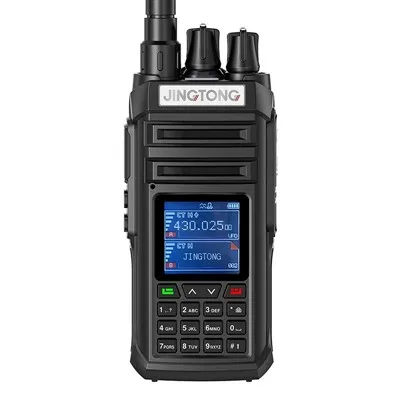
First, let’s get one thing straight: not all LTE PoC radios are built the same. Some are cheap, $50 units you find on Amazon marketed as “rugged” but barely survive being dropped on carpet. Others—like the ones my team designs and distributes—are purpose-built for harsh worksites. So when we talk about “shock resistance,” we’re not just guessing; we’re using standardized tests that the entire industry relies on. The main one is IEC 60068-2-27, that’s the international standard for mechanical shock testing. What that means in plain English is: we take the radio, drop it or bang it around in a controlled machine that simulates the kind of impacts you’d get in real life, and measure if anything breaks, stops working, or gets damaged.
Let’s walk through what that test actually entails, because it’s not just “drop it from shoulder height.” The standard uses a peak acceleration of 100 g (that’s 100 times the force of gravity, for anyone who doesn’t do physics math in their head) and a pulse duration of 6 milliseconds. For context, if you drop a phone from your hand onto concrete, that’s roughly 10-15 g—so 100 g is way more intense than a simple fumble. That test simulates the kind of impact you’d get if a radio slips out of your pocket while you’re climbing a ladder, falls 10 feet onto hard dirt or asphalt, or gets knocked off a workbench onto concrete.
Now, here’s the part most vendors won’t tell you: most off-the-shelf LTE PoC radios (even the ones with “rugged” stickers) only meet a lower shock standard, like 50 g. Those units can survive a drop from shoulder height if they land right, but if they hit at an angle, or fall from a second story? They’re probably dead. Our radios? We test them to 150 g. That’s 50% more force than the international standard for rugged electronics. Wait, I know what you’re thinking—“does that even matter in real life?” Let’s use examples from actual jobs our customers have. Last year, a construction foreman in Houston told us his team was doing a roof install, and one of his radios slipped out of someone’s harness and fell 30 feet onto the concrete parking lot below. He said he was ready to write it off, but when he walked down, it was still powered on, connected to the network, and working like nothing happened. That’s exactly the kind of impact 150 g is built to handle.
But shock resistance isn’t just about hard drops. There’s another type of shock that’s way more common for people who work on roads or heavy machinery: repeated vibration and minor bumps over hours or days. Think about a security guard patrolling a parking garage for 12 hours straight, banging their radio against a metal belt clip every time they lean against a wall, or a park ranger hiking with it clipped to their backpack, getting jostled on rocky trails. That’s where another part of the testing comes in: IEC 60068-2-6, the vibration test. We run our radios for 8 hours at a time through frequencies from 10 Hz to 2000 Hz (that covers everything from being in a moving vehicle to leaning against a jackhammer). After 8 full hours, we take it apart, check the circuit boards, the battery, the antenna—no loose wires, no cracked solder, no battery swelling. And for good measure, we also do thermal shock testing, so if you’re working in Arizona in 110°F heat and then go to a jobsite in the mountains where it’s 30°F, it still works. I bring that up because a lot of people think shock only means drops, but temperature swings can weaken components over time, making even a small bump turn into a broken part.
Now, let’s talk about what makes our radios actually shock-resistant, because it’s not magic—it’s engineering. First, the enclosure: we use polycarbonate and rubberized bumpers, not the thin plastic you see on consumer phones. The bumpers are on every corner and the sides, so when the radio falls, it hits the rubber, not the hard plastic shell. There are also reinforced internal frames made of aluminum that hold the circuit board in place. The circuit board itself isn’t just a flat board soldered to the chassis—we use conformal coating, a thin layer of epoxy that protects the solder points and microchips from moving around when it gets banged. That’s a big one; lots of cheap radios skip the conformal coating, so over time, repeated impacts can make solder joints break, and the radio just stops turning on.
The battery is another key part. Most people don’t realize that a lot of the damage from drops happens because the battery shifts or gets punctured. Our batteries are secured with adhesive strips that are rated for high impact, and they’re also wrapped in a flexible polymer shell that doesn’t crack easily, even if there’s a big impact. We also test the battery for short circuits after every shock test, because a faulty battery after a drop isn’t just inconvenient—it’s dangerous. We’ve never had a customer come back with a battery that failed after a drop, but we have gotten complaints about other brands where the battery swelled after a shoulder-level fall. That’s why we test every single battery that goes into our radios before it leaves the warehouse.
Wait, but let’s be realistic—no radio is indestructible. If you drop one into a puddle of acid, or run over it with a forklift, it’s going to break. The point is, our LTE PoC radios are built to survive the kind of stress your average field worker, security guard, or outdoor adventurer will actually face. I’ve seen customers test them way beyond what we recommend, just to prove how tough they are. Last year, a festival production team dropped one of our radios from the top of a 20-foot stage onto the concrete below. They said it bounced twice, landed upside down, and when they picked it up, it was still connected to their intercom network. That’s the kind of thing you can’t do with a regular consumer walkie talkie or even some more expensive radios that aren’t purpose-built for 4G LTE.
Now, why does this matter for you? Because if your comms go down, people can get hurt. I heard a story from a construction site in Florida a couple years back where a worker got stuck under a beam, and their team’s cheap walkie talkie died when it slipped out of a pocket and hit a pile of rebar. They had to run all the way across the 10-acre site to get a different radio, and by the time they got there, it was too late to stop the beam from shifting more. That’s not an exaggeration—bad comms on a jobsite can have life-changing consequences. Our radios don’t just keep you from having to buy a new one every time you drop it; they keep you connected when you need it most.
I also want to address a common misconception: people think 4G LTE PoC radios are more fragile than traditional analog walkie talkies because they have more electronic components. That’s actually not true. The components in our LTE radios are the same quality as the ones used in rugged handheld GPS units and industrial scanners—stuff that’s built to handle heavy use. We don’t cut corners on microchips, antennas, or enclosures, because we know our customers depend on these radios to do their jobs.
Let’s wrap this up with a quick recap, so you don’t have to go back and re-read. When someone asks “is a 4G LTE PoC radio shock-resistant?” the answer is: it depends on the brand and the testing. Most cheap units are only shock-tested to 50 g, which is fine for small drops, but not for harsh worksites. Our radios are tested to 150 g, meet international shock and vibration standards, and have engineering features like rubber bumpers, reinforced enclosures, and conformal coating to handle real-world impacts. They can survive 10-foot drops onto concrete, repeated bumps against metal and concrete, and even minor temperature swings—all without breaking or losing connectivity.
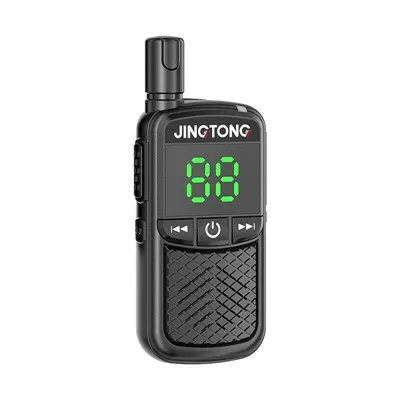
If you’re in the market for a LTE PoC radio and you’re worried about durability, don’t just take our word for it. Ask for the test specs. Ask about drop test results. Any reputable supplier should be able to tell you exactly what their radios are rated for, not just marketing terms like “waterproof and rugged.” And if you want to test them yourself, we’re always happy to send a sample for field trials—we trust our products that much. If you’re ready to stop worrying about your radio breaking mid-job and start having reliable comms for your team, reach out to us to chat about your needs. We work with construction companies, security firms, event producers, outdoor guiding services, and all kinds of teams that need tough, dependable radios, and we’ll help you find the right setup for your site.
10 Watt Walkie Talkie References:
- International Electrotechnical Commission. (2019). IEC 60068-2-27: Environmental testing – Part 2-27: Tests – Test Ea and guidance: Shock. Geneva, Switzerland.
- International Electrotechnical Commission. (2021). IEC 60068-2-6: Environmental testing – Part 2-6: Tests – Test Fc: Vibration (sinusoidal). Geneva, Switzerland.
- Industrial Wireless Association. (2022). Ruggedization Standards for Wireless Handheld Devices in Field Operations. Technical Report 004, IWA.
Jingtong (Quanzhou) Electronics Co., Ltd.
We are one of the most professional 4g lte poc radio manufacturers and suppliers in China, specialized in providing high quality customized service. We warmly welcome you to buy durable 4g lte poc radio made in China here from our factory. For price consultation, contact us.
Address: No.288, Si Huang Industry Zone, Xia Mei Town, Nan An, Quanzhou, Fujian province, China 362302
E-mail: jtdjj@jtdjj.com
WebSite: https://www.jteradio.com/
