If you’ve ever walked through a commercial building’s electrical closet, a factory’s cable run, or even a large-scale residential complex’s utility chase, you’ve likely glimpsed aluminum cable trays: sleek, low-profile channels holding thousands of feet of electrical and data cables in neat, organized lines. But if you’ve ever wondered what sets a “high appearance quality” aluminum cable tray apart from a generic one—especially if you’re someone who specifies, installs, or sources these products for your projects—it’s not just about how they look. For cable trays, appearance quality is a practical, performance-driven trait that ties directly to durability, compliance, and long-term value. As a supplier of aluminum cable trays for over a decade, I’ve seen firsthand how overlooking these details can lead to costly rework, safety risks, and even regulatory fines, while prioritizing appearance quality turns a functional component into a reliable, code-aligned part of any infrastructure. Let’s break down exactly what that means, and why it matters as much as the structural specs you might already check. Aluminum Cable Tray

First, what even is “appearance quality” for a cable tray? It’s easy to confuse surface smoothness, finish consistency, and defect visibility with aesthetics alone, but for aluminum cable trays, these traits are rooted in the material’s inherent properties and the manufacturing process. Aluminum is prized for cable trays because it’s lightweight, corrosion-resistant, and stronger than steel for its weight—but those benefits only hold if the tray’s surface isn’t compromised during production. A tray with a pitted, scratched, or uneven surface isn’t just unsightly for a building’s finished interior; that surface damage creates tiny crevices where moisture, dust, or debris can get trapped, accelerating corrosion over time. In industrial settings, where cable trays are exposed to chemicals, humidity, or outdoor elements, that kind of surface flaw can be the difference between a tray that lasts 10 years and one that fails in 3, requiring you to cut open entire cable runs to replace it.
When I talk to project managers or electrical engineers new to specifying aluminum cable trays, I often hear them ask: “Why does appearance quality matter more than, say, load rating?” The answer lies in code compliance and long-term maintenance. Most local electrical codes (like the NEC in the U.S., or IEC standards globally) require cable trays to be continuous, smooth surfaces to prevent cable insulation damage. If a tray has sharp burrs, rough edges, or surface imperfections, running cables through it can chafe the insulation over time, leading to short circuits or fire hazards. That’s where appearance quality overlaps with safety: a smooth, burr-free surface doesn’t just look clean—it protects the cables it holds. I’ve had a client in the pharmaceutical industry tell me that their original tray supplier cut corners on finishing, leaving tiny metal shavings on the tray’s edges. After a year of running data cables for their lab’s monitoring systems, the shavings had worn through the insulation, causing intermittent outages that cost them $50,000 in production downtime. That’s the kind of cost you avoid entirely by choosing a tray with consistent, high appearance quality.
Now, let’s get specific about the measurable elements that define a high appearance quality aluminum cable tray. The first is surface uniformity. During extrusion, the process used to form most aluminum cable trays, the molten aluminum is forced through a die to create the channel shape. Any inconsistencies in the die’s surface, or uneven cooling during production, can lead to variations in the tray’s thickness or finish. A good tray will have a uniform mill finish (the natural, matte finish of aluminum after extrusion) or a powder-coated finish that’s even across every section—no discoloration, no runs in the coating, no dull spots. For indoor applications, where the tray is visible (like in lobbies or open office spaces), a uniform finish also means the tray blends seamlessly with the building’s design, instead of standing out as a eyesore. For outdoor trays, like those running along a building’s exterior, uniform finish is non-negotiable: uneven powder coating or pitting will allow corrosion to start in those weak spots, even if the tray is supposed to be weather-resistant.
Next, edge and corner finishing is a huge part of appearance quality that many people overlook. Raw extruded aluminum has sharp edges, which are safe for workers handling the tray during installation, but they also need to be deburred to prevent cable damage. A high-quality tray will have edges that are rounded or chamfered—no sharp, jagged burrs sticking out. Even minor burrs might seem small, but when you’re pulling hundreds of cables through a tray, those sharp edges can slice through insulation. I once worked on a data center project where the installer told me the generic tray they’d sourced had left tiny burrs that damaged 12 cables during installation; replacing those cables at that late stage added two weeks to the project timeline and $12,000 in extra costs. That’s why every tray we supply goes through a secondary deburring process, where we run each section through a rotating brush system to smooth edges to a consistent radius, no matter the size of the tray.
Another key element is finish integrity, especially for trays that are not left in their natural mill finish. Powder coating is a popular finish for aluminum cable trays because it adds an extra layer of corrosion resistance and can be colored to match a building’s interior. But a bad powder coating job will have thin spots, bubbles, or uneven coverage. For appearance quality, that means the coating should adhere evenly to every part of the tray—including the inside and outside of the flanges, and the underside of the bottom channel. If the coating is thin on the underside, moisture can seep through, leading to corrosion that shows as brown stains on the tray’s surface, which is both unsightly in visible areas and a sign of underlying damage. We test every batch of our powder-coated trays for coating thickness with a magnetic gauge, ensuring it meets the industry standard of 3-5 mils (76-127 microns) across all surfaces. That test might seem like extra work, but it’s the difference between a tray that looks good for 20 years and one that starts peeling or corroding in 5.
Appearance quality also ties into the tray’s dimensional accuracy, which is often grouped with finish but is a separate factor. A tray that’s warped or has uneven side flanges will look uneven when installed, and it’s harder to fit cable connectors or supports, leading to gaps that can let dust or pests get into the tray. For our trays, we use precision tooling for extrusion, so every section has a tolerance of ±0.5 mm for width and height. That means when you line up multiple trays in a run, they align perfectly, with no gaps or uneven edges, creating a clean, professional look. For projects where aesthetics are a priority—like a hotel lobby or a corporate headquarters—that alignment makes the tray feel like a intentional part of the design, not an afterthought. I recently supplied trays for a new downtown office building, and the architect told me that the uniform finish and seamless alignment made the cable runs look like a planned design feature, not a messy utility setup. That’s the kind of value that high appearance quality adds beyond just function.
Now, let’s talk about what doesn’t count as appearance quality. It’s not about a glossy, mirror-like finish—aluminum’s natural properties mean a mill finish will have a subtle, even texture that’s ideal for most applications. It’s also not about overcharging for cosmetic touches that don’t add performance. A lot of cheap suppliers will polish trays to a high gloss to make them look good on a showroom floor, but that polished finish is actually more prone to scratching and tarnishing over time, especially in outdoor environments. We prioritize a consistent, durable finish that looks good for years, not one that looks flawless for a week after installation.
There’s also a common misconception that all aluminum cable trays are created equal when it comes to appearance. That’s just not true. For example, trays made from recycled aluminum might have slight variations in finish if the recycling process isn’t tightly controlled, which can lead to discoloration. While recycled aluminum is a sustainable choice, we only source from suppliers that can provide consistent, low-iron recycled aluminum, so the finish of our trays is uniform, no matter if they’re made from new or recycled material. That’s a detail that matters for both appearance and performance: consistent material composition means consistent corrosion resistance, too.
So why should you, as someone sourcing aluminum cable trays, care about these appearance quality details beyond just making your project look good? Let’s circle back to the long-term costs. A tray with high appearance quality will require less maintenance: no sanding down rust spots, no re-coating, no replacing damaged cables from surface flaws. In industrial facilities, where downtime is costly, that adds up to thousands of dollars saved over the tray’s lifespan. In commercial buildings, visible cable runs can affect tenant satisfaction—no one wants to look at pitted, discolored metal in a lobby or common area. And most importantly, it’s a safety investment: a smooth, defect-free tray prevents cable damage, reduces fire risks, and keeps your infrastructure in compliance with codes.
If you’re currently evaluating aluminum cable trays for your next project, here are a few checks to look for to assess appearance quality: run your hand along the tray’s surface to feel for burrs, pits, or uneven spots; check a sample for uniform finish, no discoloration or coating runs; test for edge rounding—you shouldn’t be able to catch a cable’s insulation on a flange edge; and ensure dimensional tolerance is consistent across the tray’s length. These are small checks, but they’ll tell you a lot about how the tray will perform long-term.
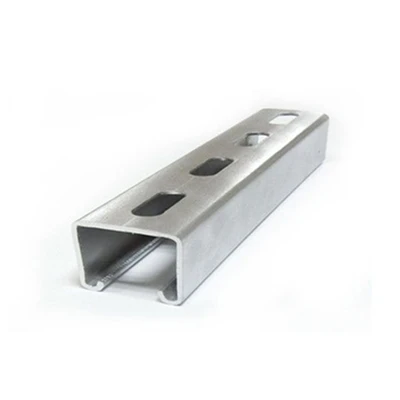
At the end of the day, an aluminum cable tray is a foundational part of any electrical or data infrastructure, and its appearance quality is a direct reflection of the manufacturer’s commitment to quality. A tray that’s built with attention to surface finish, edge treatment, and dimensional accuracy isn’t just a component—it’s a reliable part of your project’s success. If you’re ready to source aluminum cable trays that meet your performance, compliance, and aesthetic needs, we’re here to help. Reach out to our team to discuss your project requirements, request a sample, or learn more about how our trays are manufactured with consistent, high appearance quality for any application.
Industrial Cable Tray References
- National Electrical Manufacturers Association (NEMA). 2020. “Standard for Cable Trays and Cable Bus Systems.” NEMA Publication No. VE 1.
- International Electrotechnical Commission (IEC). 2019. “IEC 61537: Cable Management Systems – Cable Trays and Ladders.”
- Aluminum Association. 2021. “Aluminum Extrusions for Construction and Infrastructure: Quality and Performance Guidelines.”
- Society of Fire Protection Engineers (SFPE). 2022. “Handbook of Fire Protection Engineering – Electrical Infrastructure Sections.”
Hebei Jinglang Industrial Co., Ltd.
As one of the most professional aluminum cable tray manufacturers and suppliers in China, we also support customized service. We warmly welcome you to wholesale high quality aluminum cable tray in stock here from our factory. If you have any enquiry about quotation, please feel free to email us.
Address: Nanxinzhuang Village, Daweihe Hui and Manchu Township, Wen’an County, Langfang City, Hebei Province
E-mail: 18231629992@163.com
WebSite: https://www.jinglangcabletray.com/
