Hey there, if you’ve ever been curious about rubber cables—you know, the ones that power everything from industrial machinery to portable tools—you’ve probably wondered how they hold up when twisted. As a rubber cable supplier, this is one of the most common questions we get, and honestly, it’s make-or-break for anyone relying on these cables to work right, day in and day out. Let’s break down torsional strength, what it means for rubber cables, and why it’s not just a random number you grab online. Rubber Cable
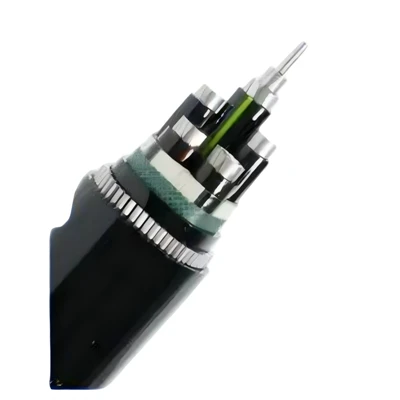
First off, let’s keep it simple: torsional strength is a material’s ability to resist twisting forces without breaking, cracking, or losing its ability to conduct electricity. For rubber cables, this isn’t just about the outer rubber jacket—it’s tied to every part of the cable: the conductive core (usually copper or aluminum strands), the insulation around those cores, and the jacket that holds it all together. Twisting a cable too much or too often can pull the strands apart, fray the insulation, or make the jacket split, which is a huge safety and functionality issue.
Now, let’s talk real numbers. We’re not here to throw out arbitrary stats—those depend on the type of rubber cable, what it’s used for, and how it’s made. For example, flexible rubber cables used in robotics or portable power tools (you know, the ones that get twisted around tool handles or robotic joints) typically have a torsional strength range of about 10,000 to 50,000 twist cycles before showing significant wear. Wait, that’s a big gap, right? That’s because a cable made for heavy industrial use (think cranes or mining equipment) has way different torsional specs than a lightweight cable for a DIY drill.
What makes the difference? The core structure, for one. Most rubber cables use stranded conductors instead of solid ones—strands are split into multiple thin wires, which can twist and flex without snapping. The number of strands matters too: a cable with 19 strands vs. 7 strands will handle way more twists. Then there’s the rubber itself. We use different rubber compounds depending on the application: natural rubber (NR) is super flexible, great for low-stress twists, while synthetic rubbers like neoprene or EPDM hold up way better to repeated twisting, heat, and abrasion. That’s why our neoprene-jacketed cables, for example, have a torsional strength that’s 20-30% higher than basic natural rubber ones—they’re built to take more abuse.
But here’s the thing: torsional strength isn’t a one-size-fits-all number. It’s tested under specific conditions, too. When we test a cable’s torsional strength in our facility, we follow standard methods—twisting the cable back and forth at a set angle (usually 360 degrees, but sometimes more for specialty cables) at a constant speed, until we see a failure. The “failure” isn’t just the cable breaking; it’s when the resistance jumps 10% or more (which means the conductors are fraying) or the jacket cracks. For industrial cables, we test up to 100,000 twists if they’re for things like rotating equipment, because those are working nonstop.
Wait, let’s use an example to make this concrete. Last year, a customer who makes automated packaging machinery came to us because their old cables were breaking every couple of weeks. They were using a basic PVC jacketed cable, which has almost half the torsional strength of our EPDM rubber cables. We supplied them with our heavy-duty twisted rubber cables, and now those cables last over 6 months, even with 1,000 twists a day. That’s the difference right there—choosing the right torsional strength for the job isn’t just a nice perk, it’s saves our customers time and money on replacements.
A lot of people mix up torsional strength with tensile strength, but they’re totally different. Tensile strength is about pulling the cable apart, like when you yank on it. Torsion is twisting, like when you wrap a cable around a spool or a robotic arm rotates. If you use a cable with high tensile strength but low torsional strength, it’ll snap under twists, even if it can handle being pulled. That’s why we always ask customers: “What’s this cable going to be twisted by?” If it’s a handheld power tool, the twists are casual, but if it’s a part of a 24/7 robotic line, that’s extreme torsional stress we have to account for.
Another factor: the cable’s size. Smaller cables, like 16 AWG for tools, have lower torsional strength than bigger ones, like 2 AWG for heavy machinery. But wait, sometimes smaller cables are twisted more often, so they need a different compound. We actually tweak the strand count and rubber mix for small, frequently twisted cables to boost their torsional capacity without making them too stiff. Stiffness is a tradeoff, right? If you make a cable super strong against twists, it might be hard to bend around tight corners, which defeats the purpose of a flexible rubber cable. That’s where our expertise comes in—we balance torsional strength with flexibility based on the end use.
Now, let’s talk about wear over time. Torsional strength doesn’t just stay the same; it degrades with age, heat, and exposure to chemicals. If a cable is left in the sun (UV rays break down rubber) or exposed to oil (oil eats through some rubber compounds), its torsional strength drops faster. That’s why our industrial cables are made with UV-resistant rubber and oil-resistant compounds—so they keep their torsional strength even in harsh environments. We had a mining customer a while back who was using standard cables that only lasted a month in their oil-dust atmosphere, and our oil-resistant rubber cables lasted 4 months. Again, it’s all about matching the torsional strength (and other properties) to the environment.
If you’re shopping for rubber cables, don’t just look for a “high torsional strength” label—ask for the test data. Any reputable supplier should be able to tell you the cycle count and the conditions it was tested under. A lot of cheap cables out there overstate their torsional strength, using thinner insulation or fewer strands, which makes them fail way faster. That’s why we stand behind our numbers—every batch of our cables gets tested for torsional strength before it leaves our warehouse, so you know exactly what you’re getting.
We also work with custom orders. If you have a specific application that needs a higher torsional strength than our standard cables, we can tweak the design—add more strands, use a different rubber compound, adjust the core configuration. Last quarter, a wind turbine manufacturer needed a cable that could handle constant twisting from the rotor blades, and we built a custom rubber cable with a 120,000 twist cycle capacity, which is double our standard industrial cable. It’s all about listening to what your equipment needs.

At the end of the day, torsional strength is a critical spec that most people don’t think about until their cable breaks. As a rubber cable supplier, our job isn’t just to sell cables—it’s to help you pick the right one for your job, so you don’t have downtime. Whether you’re wiring a new robot, upgrading your power tools, or outfitting industrial machinery, we can walk you through what torsional strength you need, answer all your questions, and even provide sample cables so you can test them yourself.
VFD Cable If you’re tired of cables that break too soon or don’t hold up to twists, we’d love to chat. Hit us up to talk through your project, and we’ll make sure you get a rubber cable that’s strong, flexible, and built to last.
References
- ASTM International. (2019). Standard Test Method for Torsional Strength of Electrical Insulating Materials. ASTM D1003-19.
- Underwriters Laboratories Inc. (2021). Standard for Safety for Flexible Cords and Cables. UL 62.
- Rubber Manufacturers Association. (2022). Properties of Synthetic Rubber Compounds for Electrical Cable Jackets. RMA Technical Bulletin 12-22.
- IEEE. (2020). Recommended Practice for Flexing and Twisting Tests for Power and Control Cables. IEEE Std 1180-2020.
Anhui Huawang Cable Co., Ltd.
As one of the most professional rubber cable manufacturers and suppliers in China, we also support customized service. If you’re going to buy discount rubber cable, welcome to get pricelist from our factory. Quality products and reasonable price are available.
Address: No. 32, East Street, Batian Street, Datong Town, Tianchang City, Anhui Province
E-mail: Linda@huawangcable.com
WebSite: https://www.huawang-cable.com/
