If you’ve ever worked in the telecommunications or civil infrastructure space, you know that speed, reliability, and minimal downtime on job sites aren’t just nice-to-haves—they’re make-or-break. As a supplier of PE Microduct Bundle Pipe COD Pipe Machines, I’ve spent the last decade standing side-by-side with contractors, pipe layer operators, and site managers, troubleshooting every hiccup that pops up when running these machines. I’ve seen a $20,000 project delayed because a machine jammed mid-production at 2 a.m. on a Friday, and I’ve watched small operators miss deadlines because they didn’t have a quick fix for a misaligned die. This post isn’t just a list of problems; it’s the real, on-the-ground solutions I’ve tested and proven with hundreds of customers. PE Microduct Bundle Pipe COD Pipe Machine
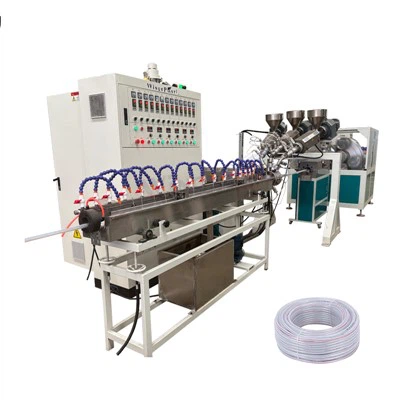
First, let’s ground this: PE microduct bundle pipes (COD, or Conduit-Optical Duct, pipes) are made of cross-linked polyethylene, lightweight, flexible, and built to hold multiple internal microducts for fiber optic cables. The machines that extrude them pull that material, combine the internal ducts, and shape the outer bundle—so their performance directly dictates pipe quality and production speed. Over the years, I’ve narrowed the most common problems down to four recurring issues: inconsistent internal duct placement, uneven wall thickness, frequent material jams at the die head, and misaligned bundle winding. Let’s break each down, how to spot it, and exactly how to fix it without calling a technician.
The first problem I hear about more than any other is inconsistent internal microduct placement inside the final bundle. I once had a customer in rural Texas call me panicking because every 10 feet of their 50mm COD pipe had one duct shifted 2 inches to the side, making it impossible to pull fiber without damage. What causes this? The core wiring stage of the machine—where the internal microducts are fed into the molten PE stream—relies on synchronized tension and guide rollers, and when those drift, the ducts shift. A lot of operators just crank the tension rollers tighter to fix it, but that only makes it worse: too much tension stretches the microducts thin, while too little lets them twist. The fix I walked that Texas customer through works for every machine I’ve supported: first, shut off the machine and let the extruder cool to room temperature—trying to adjust hot components leads to misalignment that won’t hold. Next, locate the guide plate at the core wiring station (it’s the small metal plate with holes that the microducts pass through right before entering the die). Use a caliper to measure the distance between each duct’s center and the guide plate’s center; all should be within 0.5mm. If not, loosen the four hex bolts holding the guide plate, nudge it slightly until the measurements are uniform, and tighten the bolts in a crisscross pattern (to avoid warping the plate). Finally, adjust the tension rollers to 15-20 Newtons of force for each microduct—you can test this by hanging a 1.5kg weight from a duct; it should stretch about 2cm. That customer went from rejecting 30% of their pipe to less than 1% that day.
Next, uneven wall thickness in the outer PE bundle. This is a silent killer because it doesn’t always show up on the first 10 feet of pipe, but by the time it’s 1,000 feet in, the wall is 0.2mm thinner on one side, making the bundle prone to cracking during burial or pulling through underground conduits. I had a mid-sized telecom contractor in Florida deal with this for three months, losing bids because their pipes kept failing crush tests. The root cause here is almost always the die head—the critical component that shapes the molten PE into the outer bundle. If the die isn’t calibrated right, or if there’s residue buildup, the PE flows unevenly. The mistake most operators make here is yanking the die apart and cleaning it with a metal tool, which scratches the internal surfaces and makes future flow uneven. My go-to fix for uneven wall thickness is: first, run a small test batch of PE (without internal ducts) at your standard production speed for 5 minutes, then pause and let the die cool for 10 minutes. Use a digital micrometer to take wall thickness measurements at 8 points around the pipe’s circumference—write these down so you have a baseline. Then, adjust the die’s adjustment bolts, which are usually located around the outer edge of the die head. Turn the bolt on the thinnest side 1/16 of a turn clockwise (this pushes the die gap open slightly), and the bolt on the thickest side 1/16 of a turn counterclockwise. Repeat this three times, then run another test batch and re-measure. For residue buildup, never use metal scrapers—use food-grade plastic spatulas or cotton swabs soaked in hot xylene (a safe, fast-drying solvent that doesn’t scratch PE) to clean the die’s inner and outer surfaces. That Florida contractor now runs a die cleaning every 8 hours of production, and their wall thickness consistency hits 98% accuracy.
Third, frequent material jams at the extruder or die head. Jams are the number one cause of unplanned downtime on job sites, often leading to overtime fees or missed delivery windows. I had a small operations team in Arizona that was dealing with a jam 2-3 times a shift, and they thought it was bad raw material. Turns out, it was simple: they were leaving leftover PE in the extruder hopper between runs, and that leftover material had oxidized and hardened overnight. When they started a new shift, the hardened chunk got pulled into the screw and blocked the flow. But jams can also happen if the cooling system is faulty—molten PE that doesn’t cool evenly solidifies in the die. The fix here is twofold: first, for leftover material, always purge the extruder with a small amount of virgin PE (we sell 5kg purge bags for this exact purpose) before a new run, and clean the hopper thoroughly after every shift. If jams are happening mid-run, check the cooling water lines for the die head—clogged lines with mineral buildup mean the die isn’t cooling fast enough. I recommend flushing the lines with a 10% white vinegar solution every 100 hours of operation; this dissolves mineral deposits and keeps water flowing at the correct rate. That Arizona team cut their jams from 3 per shift to less than 1 per week after making these two small changes.
The fourth common problem is misaligned bundle winding, where the microduct bundle wraps unevenly around the winder spool, leading to kinks when the pipe is later installed. Kinks are a nightmare—they make it impossible to pull fiber through the ducts, and often require cutting and joining pipe, which adds cost and time. The cause here is almost always a misaligned dancer arm or winder sensor. The dancer arm is the weight that adjusts the speed between the extruder and the winder to keep tension consistent, and if it’s off, the winding pattern drifts. I had a contractor in Illinois who was getting kinks on every 500-foot roll, and their winder was three years old with no calibration. The fix for winding misalignment is simple: first, stop the machine and make sure the dancer arm moves freely up and down without sticking. Next, align the optical or proximity sensor on the winder carriage with the edge of the bundle as it comes off the die. Most modern machines have a calibration mode—enter this mode, run 10 feet of pipe, and the sensor will automatically adjust to ensure the winding pattern is even. If you don’t have calibration mode, mark the center of the spool with a pencil, then adjust the winder carriage so the bundle is centered on that mark. Finally, check the dancer arm tension: it should stay within 10mm of its middle position during operation. If it’s too high or too low, adjust the counterweight on the arm. That Illinois contractor went from 20% kinked rolls to 0% after calibrating their winder, saving them an estimated $12,000 in rework and missed deadlines in their first month of making the fix.
Now, a quick note on prevention, because I always say the best fix is no fix at all. I recommend that all operators (even the most experienced) do a 15-minute pre-shift check: inspect guide rollers for wear, calibrate the die and winder weekly, and use only virgin, grade-2 PE resin (recycled PE can have impurities that cause jams or wall thickness issues). I also tell operators to keep a spare guide plate, tension roller, and die adjustment bolts on hand—small parts that wear out often and cause long delays when you have to wait for shipping.
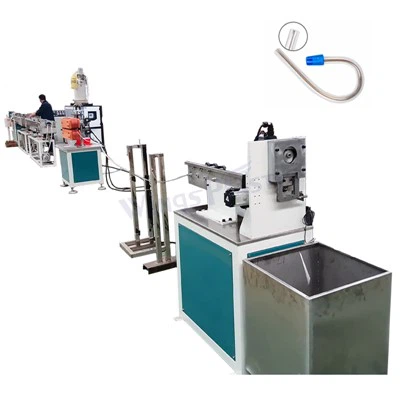
At the end of the day, every machine will have occasional issues, but most of the time they’re not because of a faulty machine—they’re because of small, easy-to-fix adjustments or routine maintenance. If you’re dealing with any of these problems, or running into a unique issue with your PE Microduct Bundle Pipe COD Pipe Machine, our team has over a decade of hands-on experience troubleshooting for contractors and operators across the globe. We don’t just sell machines; we provide ongoing support to make sure your production runs smoothly, your deadlines are met, and you get high-quality COD pipes every time. Whether you need a quick troubleshooting guide, a spare part, or want to upgrade your machine to reduce downtime, we’re here to help. Reach out to us for a consultation to discuss your specific needs and how we can support your projects.
PVC Pipe Machine References
- Plastics Extrusion: Principles and Practice, 2nd Edition, Hanser Gardner Publications, 2014
- Telecommunications Conduit Installation Standards, National Fiber Optic Engineers Conference, 2021
- PE Pipe Extrusion Process Optimization Report, International Association of Plastics Manufacturers, 2020
- Field Troubleshooting Guide for Polyolefin Extrusion Equipment, American Society of Mechanical Engineers, 2019
Qingdao Wings Plastic Technology Co., Ltd.
As one of the most experienced pe microduct bundle pipe cod pipe machine manufacturers and suppliers in China, we also support customized service. Please feel free to buy durable pe microduct bundle pipe cod pipe machine made in China here from our factory. For price consultation, contact us.
Address: C02 Of Anshengyi Road, No.2 Fuan Industry Zone,Jiaodong Town, Jiaozhou City, Qingdao City, Shandong Province,China
E-mail: kelly@wingsplastic.com
WebSite: https://www.wingsextruder.com/
